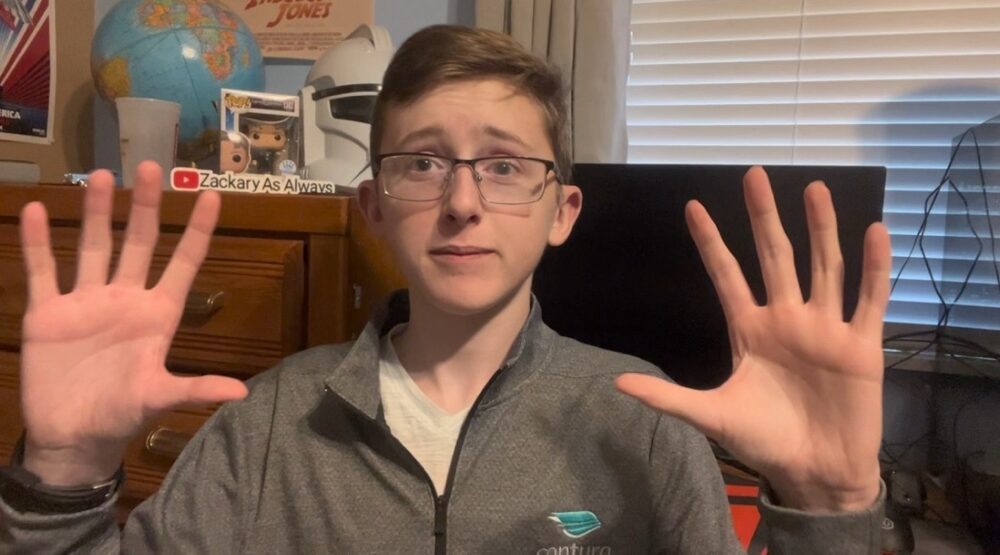
One of the coolest guys in the film review game I know is someone you may not be familiar with — Dan Stalcup, a critic with his own site that came to existence in the wake of 2020 called The Goods: Film Reviews, founded, made, and edited all by him, where he posts his reviews on there of new, old films and all in between. He also has a film podcast of a similar name to his site (The Goods: A Film Podcast) that he hosts with his Buddy Brian Terrill. Beyond film reviews in general, he also uses his platform to promote indie filmmaking through an article section of The Goods called The New Cinephile, as well as being a voting member for the Independent Spirit Awards, celebrating the best indie filmmaking over the past year. Before all of the good on The Goods, Dan’s film criticism start can trace back to his time when he made the website “Earn This” in 2009, a site to be in the know about all things pop culture. One of the coolest thing I learned about him over my time of having a few chats was when he got a set of films shipped by Neon for him to watch whenever, with the selection being new films like Sentimental Value and Sirat, that’s when I knew he was a real deal critic.
That subtle flex from Dan aside, getting noticed from award shows and independent distributors is far from what gained my respect for Dan as a critic. I grew to love and respect his reviews for his honesty and ability to fully articulate his thoughts in reviews with validity. Whether its an opinion I agree with or not, his opinions and two sense on films are always fully open minded and concise, making sure to get to the root depths of what makes the film and his perspective on it what it is. In this interview, Me and Dan discussed multiple things like his unconventional “Is It Good?” rating scale, the humble beginnings of his passion for film dating back to decades ago, and some of the things he cherishes in his role as a respected critic and commentator on film.
EB: For those reading who don’t know much about you, is there anything in particular you think they should know about yourself as a critic or your site The Goods as an introduction?
DS: Hey Eli, thanks for reaching out and giving me a chance to share my experience and thoughts. I’m an independent film critic who writes reviews for both classic and newly released films on a web site called The Goods: Film Reviews. I also co-host a podcast called The Goods: A Film Podcast with my good friend Brian that releases a new episode most weeks. On both the podcast and the site I cover a wide variety of films from different perspectives. I also recently started a review journal focused on shorts made by emerging and student filmmakers called The New Cinephile. I’ve been writing reviews for music, movies, TV, and more since I was in high: school 20 years ago, but I got much more into it in college and my early 20s when I started a review and culture blog with some of my friends called Earn This (as in the key line from Saving Private Ryan). Since 2020 I’ve been podding and writing about movies pretty seriously — 2020 was when I kicked off The Goods, first as the podcast, then as the review site.
EB: One of the first things that stood out to me was your 8 point scale, also known as the “Is It Good Scale” similarly inspired by film critic Roger Ebert’s 4 point grade scale. Could you basically explain the basics of the scale and why you love to use it opposed to a typical 5 star or ten point scale?
DS: The review scale originates from the podcast, and then I adopted it for my writing. The origin of the name “The Goods” was actually from Brian, my podcast co-host. That was a name for a proposed series of film reviews of movies he liked but didn’t love (so instead of “the greats” it was “the goods”). We decided to apply it to movies of any ilk we wanted to discuss, great to bad, and a few minutes before we recorded our first episode, I had the epiphany of a rating scale that used the word “good” in each of its levels. I quickly drafted out the scale almost exactly as I still use it. I initially wanted 10 points to match the “out of 10” / “five star” rating systems I’d used before on Letterboxd and elsewhere, but I couldn’t come up with ten names that felt distinct enough, so we tried it with eight different tiers, and it stuck
Brian found it a little confusing at first, so I suggested we just think of it as the Ebert 4-star system, with each rating being a half star. Eventually we calibrated it so we both know what each level “feels” like. Anything 5 or higher I consider a passing or recommended grade; anything 4 or lower is a failure. You can read the names of each of the levels on my site, but the one that has become part of the “brand” of the pod and the website is “tour de good” which is a spin on “tour de force,” the 8 out of 8, which I use very sparingly. I couldn’t find wordplay with the word “masterpiece” to include the word “good” like I wanted to, so I went with that. I still call it “the masterpiece rating” though.
The rating scale is a little bit tongue-in-cheek, but I’m not sure that really carries at first glance. I have complicated feelings about using numbers to “grade” art, and so by playing up the use of the number with the simple question “is it good?” I’m also trying to implicitly make fun of relying heavily on number scores. But I also love how it forces me to articulate my feelings, positive or negative. So it’s a bit serious and a bit ironic
EB: One of the things I found in my research on The Goods was indeed part of your roots of writing when you made the site you mentioned early called earnthis.net, a site for writing about all things pop culture. In your list of Top 100 things Pop culture, you credited Roger Ebert as number 43. What about Ebert specifically influenced you as a critic and/ or your appreciation for film In general, and are there any other critics who you look up to or really admire?
DS: Ebert is a titan of film criticism. He threaded the needle between being populist, like having a good sense for what people from all stripes will love or hate, while also being extremely intelligent and articulate in a way film buffs could still appreciate. I still have his compendium of 4-star reviews on my bookshelf. He had a way of writing to make you understand why you felt something when you watched a movie, and he was unafraid to go against consensus, particularly in celebrating unheralded works. Since his reviews were published in a newspaper, his writing was concise and accessible, and he was very conversational. He could be funny, sentimental, cerebral, and bitter — sometimes all in just a few sentences. His “Great Movies” series exposed me to many canonical works of film history, and opened my eyes to many great directors and movements.
These days, my favorite writers are those who I want to be like myself: independent, lovers of film history, extremely smart, idiosyncratic, unique voices, and unafraid to look beyond the 12 or so films that get awards buzz each year (while still finding time for those). I also love writers who frequently write about films from the past. These days, I read a lot of Scout Tafoya (who makes video essays on RogerEbert.com but also has a Patreon a couple of books), Tim Brayton from Alternate Ending, Hunter Allen from Kinemalogue, Mike D’Angelo, and plenty of others. But I’m always checking out books of old movie writing, and I love reading the legends of the field — Ebert, Jonathan Rosenbaum, Pauline Kael, so many others. Film criticism and studies is a vibrant field with a rich history that’s worth exploring.
EB: an important thing about criticism is structuring your review articles in a way that should be concise, properly stating your opinion in depth and clearly. How do you personally structure your thoughts and digest a film onto page when reviewing it? More specifically on the topic of the process of how you prepare or outline writing a review, and how long it takes you to formulate your full opinion on the film before writing a review on it.
DS: The first thing I’ll say about this is that I’m always adjusting my approach and thought process. So what I say about this day to day, let alone year to year, will vary wildly. I usually try to trust my instincts — if I feel I have a grasp of a movie, I’ll draft a review the same day. Other times, I’ll wait a week or more, thinking and learning about the film. I’m honestly not sure what results in better criticism — instinctive reactions or more measured thoughts.
When writing a review, I try to think about what an “inroads” to my thoughts on the film is — sometimes it’s a personal reaction or anecdote, sometimes it’s a pithy quip, sometimes it’s some historical/cultural context, sometimes it’s an intro to the filmmaker… and sometimes I just dive right in. I usually give a little bit of recap on film’s plot. I try to analyze the storytelling technique and craft, but also infuse it with my personal feelings. I don’t always emphasize the same things — sometimes I’ll focus on the writing and story, other times on the filmmaking technique and visuals, and other times on just my personal relationship with the film. I’ve been struggling for half a decade of serious film writing now to figure out what my “voice” is, and I still haven’t — I’m not sure I ever will.
The extent to which I outline varies — for awhile, I was in the habit of writing a detailed outline, but I found that led to longer and more laborious reviews, which sometimes I was pleased with and sometimes felt overwrought. Nowadays, I try to plan at least 5 or so thoughts to focus on, and weave them into an overarching take on the film, but my approach really varies each time. I also do a lot more rewriting after first drafts than I used to — sometimes whole paragraphs at a time. But it’s an an ongoing process to figure out.
EB: For those who don’t know, you’re also a voting member for the indie spirit awards and you also have a really great article section called The New Cinephile, where you review independent, micro-budget, and student made films. Over your time as a critic so involved in promoting the indie space, what’s your favorite part about highlighting these films and what sets them apart to you from a creative standpoint, compared to others working with bigger budgets and more resources?
DS: Writing about indie filmmakers is something I find to be rewarding and also challenging. Indie filmmakers often don’t have the same level of experience and technical expertise as more established filmmakers, so you have to come in with a mindset to be looking for something fresh and original rather than polished (though many indies have extraordinarily good instincts and craft). They definitely don’t have the same access to budget. Thus, I find it rewarding when films find unique approaches or storytelling tones rather than just doing a watered down version of a blockbuster.
“Indie” has different levels in my eyes — sometimes you have festival darlings, like this year’s Twinless, Sorry Baby, and Oh Hi, all of which charmed me to varying degrees, but are still pretty well covered and reviewed if you keep up with the major film festivals, which I try to do. With The New Cinephile, I look even deeper, trying to find filmmakers who are still very early in their career and have trouble getting any coverage of their work, especially diverse and international voices. When I write about filmmakers this small, I always try to do so from a celebratory perspective — highlighting what up-and-coming filmmakers do that are uniquely their own strengths and characteristics and could possibly translate to a bigger scale.
EB: Also as far as filmmakers go, you named your top 3 GOAT film directors to be Steven Spielberg, Wes Anderson, and Richard Linklater. What about all or at least one of their Individual styles and approaches to the art of storytelling and film itself, do you love about them that you’d say puts them in that upper echelon?
DS: Haha, I think you are referencing about my “Directors Index” where I put directors in one of three tiers, and those are the three I’ve put in “Tier 1: My GOATs.” To be clear, they are not necessarily my three favorite directors of all time, or the three “greatest” directors, but they are the three where I’ve added them to my “index” of directors I’ve written several reviews about. Alfred Hitchcock is another director who should be there, and I could probably list a couple others. I do adore all three of them, though, for very different reasons that I could write thousands of words about each. I guess one thing that ties them together is that each has a very large, rich, and complicated filmography that you might even call contradictory — only Anderson among the three has had what you might call a consistent style and tone across a career, though I think even he has been more adventurous and dynamic than he often gets credit for.
My favorite Linklater works use the passage of time in interesting ways — either compressed, or spread out, or, in the case of the Before trilogy, both. Anderson has a consummate visual eye — he diverged from the Tarantino-inspired shift towards grit and coarse opera towards something more deadpan and in conversation with theatrical artifice, but, especially as he’s aged, in profound engagement with timeless questions about life, youth, age, death, and the spectrum of human experience. And Spielberg requires no introduction — the popcorn master who became an indisputable artist and whose career has re-aligned about six times in as many decades.
EB: going back to the is it good scale, the highest grade on the scale is Tour De Good at 8 out of 8. Off the top of your head, what film would fall into Tour De Good rating and why?
DS: This is a great question, because I only give a “Tour De Good” to movies that are really special in many ways — it needs to be a major and unique artistic achievement, but also one that really speaks to me personally and provokes big feelings. It needs to be a movie I’ll never forget and feel very warmly towards without anything major I really hold against it. Just a sweeping experience, whether it’s a grand spectacle or an intimate film.
The first movie that pops into my head that checks all of these boxes is Psycho, which I wrote a really long review of a few months ago. As I get deeper into Hitchcock (who will definitely be in that “Tier 1” section whenever I make a page for him), the more I realize how unique he was, and Psycho was one of his starkest and boldest achievements, and certainly his most influential. It’s a stunning film on basically every dimension, and still somehow more than the sum of its parts as an overall experience.
EB: Lastly, You’ve been into the cinephile space for over a decade now from what I could find. What’s a lesson or piece of life advice the medium of film and/or criticism has taught you that you carry or think about often?
DS: My number one piece of advice is to be voracious as a movie lover, looking into older films and international films and every genre. Don’t be afraid to watch movies that your buddies might not be watching or raving about. Sometimes that means embracing challenging art films, and other times that means trying to find value in fluffy entertainment. I have a soft spot for made-for-TV or -streaming musicals, but I also never shy away from heavy or experimental works.
The corollary to that is to follow your own heart and instincts, especially as you get your “sea legs” as a movie lover and come to find directors and styles that you like. No one person defines the canon, and so no one movie lover should buy into popular or critical consensus — be confident in yourself and your heart, and let movies be something that make you into a richer and more confident human being.