One of the great net positives of the internet is discovery. You can find new things, new places, new people in just a click of a search bar or the scroll through an algorithm. This includes and applies to the discovery of passionate and esteemed filmmakers as well. Youtube can be a goldmine of small indie short filmmakers to put their work out there for the world and show their talent and skill they bring to the table with less resources, but just as much if not more drive and hunger to feed into the passion the medium of film brings. On filmmaker Conor Flynn, I happened to hit the jackpot finding his page on YouTube, and stumbled upon wonderful short films made by him with creatively daring, unique approaches in storytelling through narrative and technical elements. He’s also a solo filmmaker, directing, writing, editing, shooting etc. the films all by himself, being a proclaimed self taught filmmaker.
Conor Flynn is a young filmmaker from Ireland who spends his days working hard on short films he uploads on his YouTube channel of the same name. His films primarily range from the genres of comedy and drama, with his most popular short film being “A Bad Idea”, currently sitting at 780,000 views on YouTube. He’s also expanded into genres like sci-fi and horror with his other films such as “Parental” and “Nostalgia”. In the interview, Conor goes into a deep dive on his creative process as a scrappy solo filmmaker, his route to learning the art of film and the technicality of it, as well as how he stays inspired and intuitive as a creative storyteller in service to the medium through his passion for the craft.
EB: For those not familiar with you or your work, can you introduce yourself and the type of films you typically make?
CF: Sure my name is Conor Flynn, I’m from Ireland. I make short films on YouTube, mostly comedy but been trying out more dramatic stuff lately. I usually work on my own as a self taught filmmaker.
EB: I was kinda curious to know this as someone getting into film and aspiring to become a writer/director myself. When you were younger and starting to fall in love with film, what were some of those core formative experiences that bolstered your passion and motivation to become a filmmaker?
CF: My dad used to tape cartoons for me on VHS when I was a child, like Godzilla and Transformers and that kind of thing. One day the tape malfunctioned and instead it recorded a film called The Asphalt Jungle, a black and white noir film about a heist. I had never seen anything like it, it actually gave me nightmares. But it was my first introduction to “real” films. I think that started me down the road to being interested in to exploring the world of movies and seeing what else was out there
EB: You seem to be pretty self reliant when it comes to the production of your films. What’s been your primary source of learning new techniques and ways to evolve you’re craft as you try to hone in on your skills more with each new film you make?
CF: Definitely YouTube. Rob Ellis is someone who I almost entirely learned lighting from. His explanations of set ups and upstage lighting was a huge help as a novice.Also it’s hard to ignore the channel GawxArt, I think a lot of YouTube and IG filmmakers take influence from there in one way or another.
EB: Also, did you go to film school? I assumed not because of how independent you are in your learning process but either way I was just wondering your thoughts on that whole pathway of film school in general
CF: I attended a 1 year introduction to film/tv production at a community college a few years ago. I wouldn’t call it a film school as such, definitely not anything on the level of what you’d find in New York , LA etc. but it was a good intro to the basics like editing and stuff. I think film school is really useful but mainly for networking. To be around a bunch of people in a similar position who are looking for crew, learning the ropes, looking for jobs etc. if you’re only looking to learn technical stuff quite honestly I don’t think film school is the right thing to pursue, most things are available to learn online. The most valuable thing at a film school would be the people you sit next to in the classroom
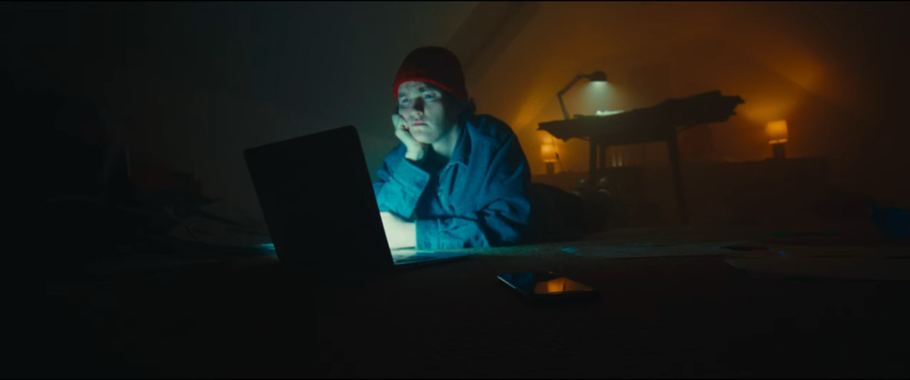
EB:My personal favorite film of yours is Nostalgia. I think it captures such a vivid feeling of trying to regain those flashing moments of the past so well. The film has a trait all of your films do one way or another – capturing a human experience, emotion or idea in the span of a film. My question is, do you come up with your story ideas & themes that you value in the spurt of any given moment or is it sort of a long process in your head that brews over time?
CF: Hard to answer, some ideas take a long time to arrive, some knock politely asking to be let in and sometimes they just kick down the door lol. There are film ideas I’m working on today that I’ve been making notes on for years and years. But the next film I make is probably going to be one I came up with in a dream last week.
EB: Speaking of your film Nostalgia, I saw on your page that the short is being shown at the Fastnet Film Festival in May. What key pointers would you give to other filmmakers trying to get their work out into the open and get more exposure?
CF: I think it’s only worth submitting to festivals if you plan on going to the festival in person, and if you plan on talking to other people there. In the past I have submitted to festivals just because I thought “that’s what you do”. And I submitted to dozens of festivals just trying to get the validation of being accepted or to put a laurel on the poster/thumbnail. But there was no point to that, all it meant was that 20-30 people in some place far away saw my film. And it costs money that can quickly add up. Compare that to just putting it in YouTube where potentially 200 people (or 2000, or 200000) will see it. Like film school, I think the main value in festivals is the people you meet there.
EB: Another one of your most unique works in terms of ranging genres is probably your micro-horror short “Parental”. Is there any other specific genres you’ve wanted to explore and what specifically sets that genre apart that makes it exciting to tackle in the form of film storytelling?
CF: If I had $100m I’ve got an idea for a split-screen film showing two people simultaneously for the whole run time, in a big epic rise-and-fall drama, maybe if I ever win the lottery I can make it. But in general I love films that play with the way the story is presented, split screens, picture-in-picture, unusual aspect ratios, mixed media. I think it’s a very underutilized part of filmmaking.
EB: You bringing up the sort of unique storytelling like split screen made me think another film with unconventional storytelling (Magnolia). Is there any awe inspiring films you look at and sort of wish you could’ve made?
CF: I think La Jetee is the most amazing film. And Koyaanisqatsi. I can’t believe how creative and original those films are. They’re like movies from an alien planet. I think some of the movies I admire the most are the ones that make me question what a film can be.
EB: Your short film “Identity Theft”, covered the sort of duality behind taking inspiration from other sources and people. I assume you must wrestle with that a bit yourself. As a creative artist, how do you balance taking inspiration from others and coming up with your own natural ideas to formulate your voice as a filmmaker?
CF: Like anyone, I think I imitate and copy things from others whether i like it or not. It’s almost impossible to separate yourself from your influences. I think Matisse said something about originality like: “don’t try to be original, try to be good. Be technical, practice the basics. And if you have something original in you it will come out.”
EB: One of the first things about your filmmaking style I loved off the bat was your distinct style in cinematography, lighting and color grading. It feels like such a dreamscape reality you capture with the wide variety of colors and beams of light in areas. What’s the process like in trying to get those specific types of shots and how much of it attributes to natural lighting opposed to color grading in the edit?
CF: A lot of trial and error. I spend a lot of my time doing test shots, practice shots etc. 99% just gets deleted. But I think I am gradually lowering that percentage haha. Hopefully my next short film will actually be about the topic of deleted scenes, and all the pieces of a film/a life audiences never see. As for natural lighting vs a grade I find it hard to comment, I just “eyeball” the colour grading and don’t have much technical knowledge. But it’s working well so far!
EB: Lastly wanted to ask, where do you see yourself as a filmmaker years down the line? It’s a cliche question but an interesting one to apply with many filmmakers desiring to have a career in Hollywood for more exposure to a larger audience and enough resources to make their dream creative ideas. Do you think you fall into that category, or you simply want to continue doing it for the passion and maybe larger recognition will follow from persistence and a bit of luck?
CF: I think I do dream about one day making a “traditional” feature film. One that plays in theatres. And a lot of the ideas for films I write down follow along the lines of having actors, a crew, locations etc. the resources that only come from larger budgets. But at the same time the place I’m in at the moment keeps surprising me and giving me ideas for new kinds of films, new kinds of stories. Right now I think this is the most exciting time to be a solo/indie filmmaker and I want to keep digging and see what I find.